
The Slapton Road and the Erosion of Stewardship
Infrastructure, memory and national confidence
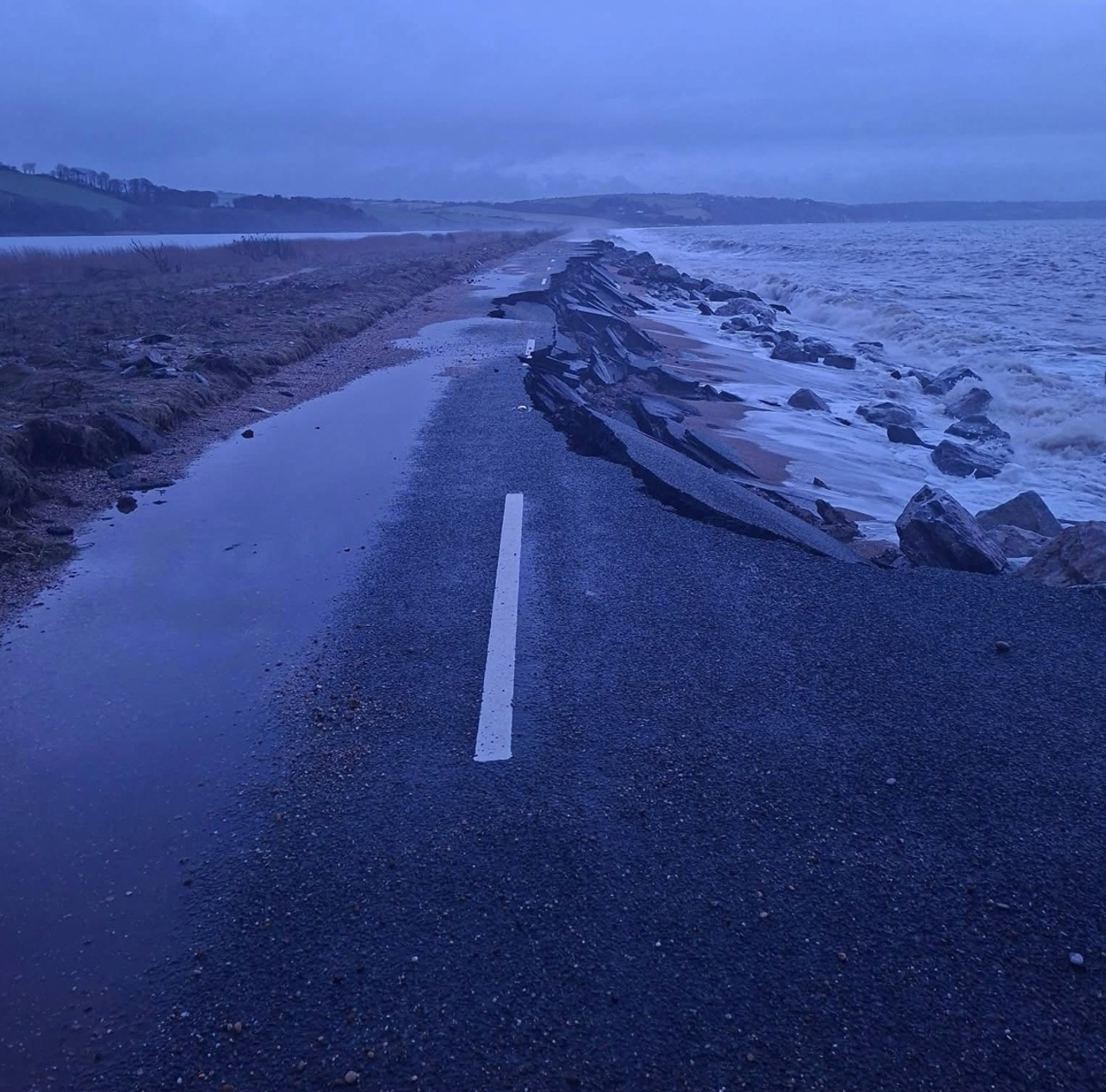
Slapton Sands. A road exposed by the sea, and a reminder that what we fail to maintain is eventually revealed.
There is a road that runs along Slapton Sands in Start Bay. In recent storms it has been broken apart by the sea. Sections have collapsed. Communities are cut off from one another. What once enabled movement now enforces separation.
This is not merely a local inconvenience. It is exposure.
This coastline carries a shared inheritance. In 1944, American forces trained here for the Normandy landings. During Exercise Tiger, hundreds of U.S. servicemen lost their lives before the invasion had even begun. They came as allies to a foreign shore in defence of freedoms that were not yet secure.
Above the beach sits a Sherman tank recovered from the seabed. It does not celebrate victory. It bears witness to cost.
The road that runs past it is now broken.
We are told there is no money for a permanent replacement, despite the fact that the sums required would likely be in the tens of millions. Without this road, local communities are not simply inconvenienced. They are severed. Journeys become impractical. Social and economic life contracts. Isolation becomes structural.
This explanation sits uneasily within the wider fiscal reality of the country. The United Kingdom now spends well over one hundred billion pounds each year servicing its national debt. Interest payments alone exceed the budgets of many core public services and continue to rise. This is not a temporary constraint. It is embedded.
Alongside this, the government has committed £11.5 billion to overseas climate finance spread over several years. This is not an argument about the science or merits of those programmes. It is an observation about proportion. That sum towers over what would be required to protect a vital piece of national infrastructure and a site of shared memory.
There is something disquieting about a country that speaks confidently about global responsibility while struggling to maintain the physical foundations at home that bind history, community, and continuity together.
At this point the symbolism deepens.
Infrastructure functions like currency. It is a system of trust. It connects people, enables exchange, and underwrites daily life quietly and invisibly. It only works while confidence holds and maintenance is taken seriously. When neglected, stress does not create failure. It reveals it.
In that sense, the road at Slapton feels like a physical analogue of the nation’s finances. Long sustained by assumption rather than renewal. Exposed by forces it can no longer absorb. Once broken, everything around it becomes harder to move, harder to trust, harder to sustain.
The storms that destroyed this road did not cause decline. They uncovered fragility.
That is what makes this moment emblematic. Not because it is dramatic, but because it is honest.
There is a line embedded deep in the cultural memory of this country, a lament addressed to a great city that once stood at the centre of meaning and order. It is not a cry of anger, but of grief. Not condemnation, but sorrow at what has been neglected and allowed to fall.
It resonates because it speaks to a recurring human pattern. Prosperity breeds assumption. Assumption breeds neglect. Neglect is only noticed when pressure arrives.
Geopolitical strain, fiscal exhaustion, and institutional overload are now applying that pressure. What fails under it tells us what we did not tend when conditions were calm.
The road at Slapton may not be repaired. The fiscal constraints are real and worsening. What is at stake is not simply access, but memory, connection, and confidence.
A serious nation understands that credibility, whether moral or economic, is cumulative. It is built through coherence between what is honoured in speech and what is sustained in practice. You cannot indefinitely project virtue outward while allowing the ground beneath you to erode.
Jerusalem, oh Jerusalem.
It is not nostalgia. It is diagnosis.