
Shadowlands, and the Cost of Not Feeling
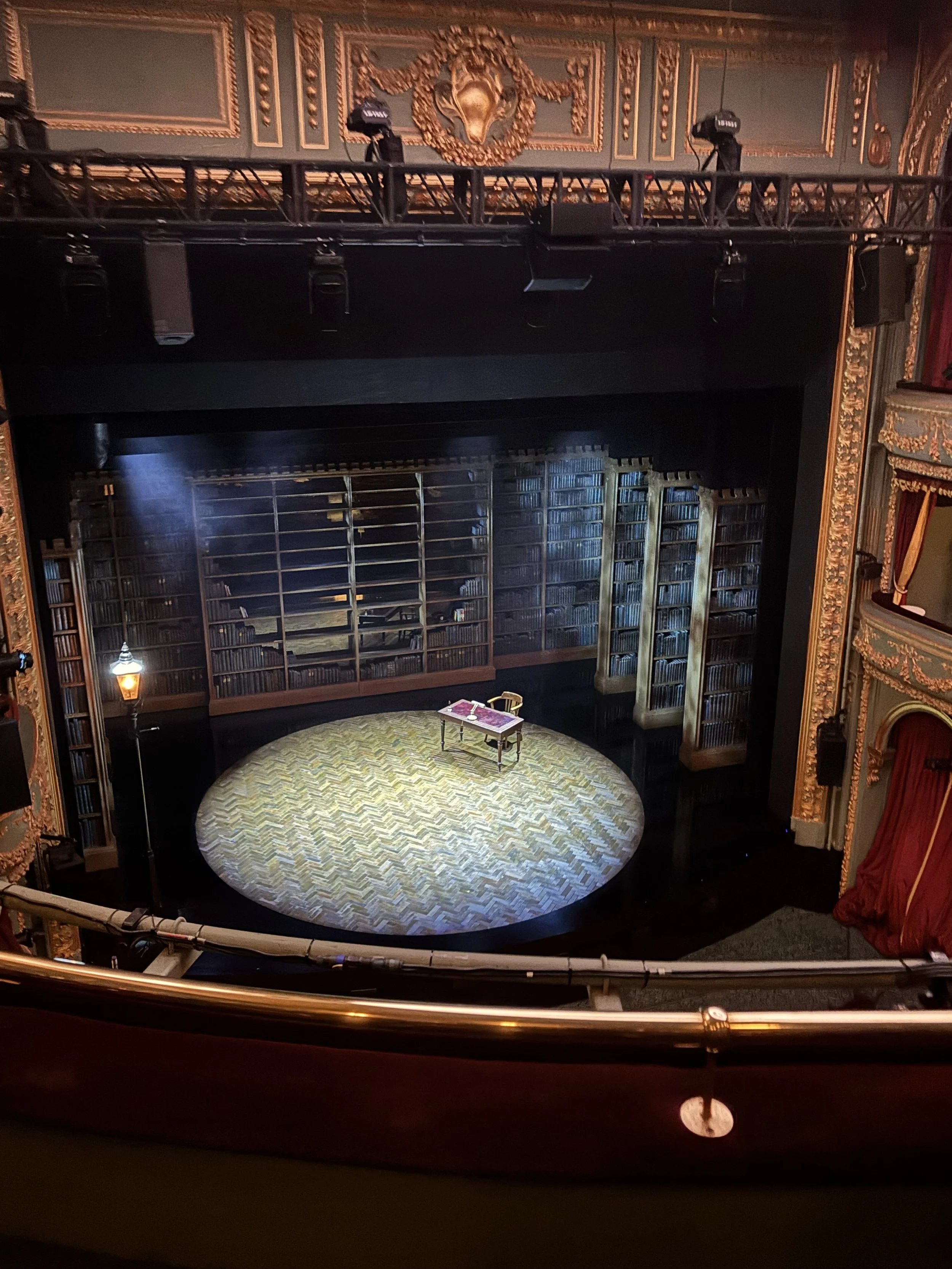
We went to the theatre this week, Zoe and I. The Aldwych. A cold and wet Wednesday evening. Hugh Bonneville was playing C.S. Lewis.
I did not expect to be moved quite as thoroughly as I was.
Shadowlands tells the story of Lewis’s late marriage to Joy Davidman, an American poet and intellectual who arrived in his life when he was middle-aged, settled, and very comfortable. And then she became ill, and grief came for a man who had spent decades writing about it from a safe distance.
The play is, on the surface, about loss. But underneath that, it is really about the cost of not engaging. Of protecting yourself so completely from the possibility of pain that you also foreclose the possibility of real joy. Lewis, at least the Lewis of this story, had built an existence of considerable warmth and almost no vulnerability. Friends. Routines. Words. God at the level of idea rather than encounter.
Joy Davidman broke that open. And then the cancer came and broke it further.
I have been thinking about this quite a lot since the performance.
Bonneville is superb, and this needs saying properly rather than as polite preamble. There is sometimes an assumption that actors who have achieved great commercial success coast on their recognisability. Downton brought him a global audience, and he could, if he chose, trade on that indefinitely. He does not. You can see in him something that true performers tend to share: the work still matters. He is present in a way the camera cannot manufacture and the stage demands without negotiation.
Lewis as he plays him is not a caricature of British reserve. He is something more recognisable and more uncomfortable: a man who has intellectualised his defences so successfully that he has mistaken them for wisdom. He can speak eloquently about suffering. Yet for all his intellectual prowess, he has not learned how to suffer.
This is a recognisably British condition, though not exclusively ours. We have simply refined it into something close to an art form. We speak well of things we feel badly. We admire but we cannot express. We arrange our emotional lives like the furniture on this play's sparse set: placed carefully, rarely touched, and never quite lived in.
What the play quietly insists on is that faith offers no exemption from pain.
This surprised me, though perhaps it should not have. Lewis was the great popular apologist of his century, and yet the play refuses to let faith function as an escape from grief. His anguish, when it finally arrives, is real and theologically unresolved. He beats against the walls of his belief with something very close to fury, and the play has the decency not to tidy this away.
The line that has stayed with me is not one of theatrical cleverness. The pain now is part of the happiness then. The grief is the love, continuing, with nowhere else to go.
This is not comfort exactly. But truth has a quality that comfort often lacks: it does not require you to pretend.
I should say, too, that the play did something I had not anticipated. My own faith is not Lewis’s, and it has arrived by a different road. But watching a man of serious belief wrestle honestly with God rather than retreat into platitude was strengthening. The play never preaches. It never resolves Lewis’s doubt too cleanly or too quickly. What it shows instead is someone for whom faith is not a refuge from reality but an insistence on engaging with it fully. There is something in that which I found, unexpectedly, clarifying. A reminder that faith worth holding is one that can bear the weight of real experience, including the unbearable kind.
Zoe and I walked out into the Strand afterward and said relatively little, which is, I think, the correct response to theatre that has done its job properly. I glanced at Zoe more than once during the second act. Nothing was said. Nothing needed to be.
We are not Lewis, and we are not facing what he faced. But we are not young, and we are not immune to the particular failure the play diagnoses: the tendency to arrive at the end of something, a year, a marriage, a friendship, and find that we deferred the things that mattered until conditions were more convenient. They are rarely more convenient.
I wrote recently about Tony Robbins and the relationship between physical state and psychological change. The diagnosis there was about passivity, about the danger of waiting for life to become easier before beginning to live it properly. Robbins frames this energetically, in a register quite alien to Lewis. But the underlying observation is not so different. Joy Davidman would have called it a courage problem. Lewis, eventually, framed it as a question of love, specifically the error of treating love as a risk to be managed rather than a gift to be received, impermanence included.
These are not different problems wearing different clothes.
The Aldwych was full. A weekday audience, mostly older, well dressed, quiet. We laughed in the right places and I noticed that more people than I expected were wiping their eyes by the end, myself included. This may be one of the best things theatre can do: create permission. Permission to feel something we have been quietly carrying for some time but had not yet found occasion to acknowledge.
Lewis wrote somewhere that we read to know we are not alone. The theatre works in the same direction. It’s not escapism but an accurate description of where we actually are, and then perhaps the beginnings of movement.
Joy got through his defences. The cancer got through hers. What remained, briefly, was something genuine and unguarded.
That is enough. More than enough actually. For Lewis, and perhaps for any of us courageous enough to pay attention.