
The CUrrent

Why so many people feel that doing everything right is no longer enough
There is a type of fatigue that no amount of sleep can resolve. You get up, you work, you keep the small promises to your loved ones and friends, you set something aside for the people who will need it when you are gone, and still the ground beneath you seems to slope away, so that the same effort which once carried you forward now barely allows you to stand still. Perhaps you suppose the fault is yours and you resolve to try harder, to want less, to rise earlier and work later.
This is the honourable reflex of a decent person that has been turned into a weapon and pointed back at you.
Picture a man in a boat. He has been told, correctly, that the far bank is where the good things are kept, and so he rows. He is strong and he is willing, and for a while he can see his efforts paying off as the bank draws nearer. Then, beneath the hull, without his knowledge and beyond his sight, the river quickens. He rows as he has always rowed, with the same plain and faithful stroke his father taught him, and the far bank holds its distance, and then begins, so slowly that he can never quite catch it in the act, to withdraw.
A good natured person does not curse the river but becomes annoyed with what he perceives as the weakness and inadequacy of his own arms.
He was raised to believe that the man who labours and goes without will arrive, so when he does not arrive he is left with a single explanation, that he has not laboured hard enough nor gone without enough. The current never tells him what it is doing, and it never asks his permission. It silently takes his dream away from him, and it never once troubles to announce why. That is the malevolent genius of the current. A new or higher level of taxation must be approved by a vote. But the river merely continues to flow.
The river has a name, though you will wait a long time to hear a politician say it. The arithmetic of an ageing nation was settled years ago, in the sizes of generations already born and already counting down, and a sum like that can be balanced in only three ways. Firstly, the people can be asked to vote for the pain, in plain figures, at a podium, before an election.
Second, a foreign creditor can be summoned to impose it, which is what the gentleman from the IMF has always been for.
Third, the currency can be sent out after dark to carry the pain away on its back, a percent or two a year, for as long as everyone can be persuaded to look at something else.
Lay that choice before any democracy that has ever drawn breath and it will reach, every time and without a flicker of hesitation, for the third, because the third is the only one of them that obliges no minister anywhere to sign his name. The saver is made poorer by a process with no author and no announcement, and is then graciously invited to experience the loss as a fault of his own character.
This is the oldest conjuring trick a national leader knows, and like all the finest tricks it is performed in plain sight. Five centuries ago Henry VIII, chronically short of money and gloriously long in appetite, left the face of his coinage exactly as it had always been, the same proud profile, the same stamped guarantee of worth, and drew the silver quietly out from within, cutting in cheaper metal until the coins wore thin in circulation and the copper began to show through at the highest point of the engraving, which fell, with a comedy he cannot have relished, upon the bridge of the king’s own nose.
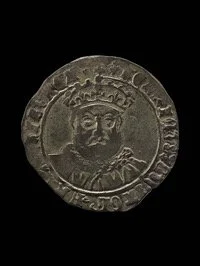
Old Coppernose coin
His subjects began to refer to him as Old Coppernose. He didn’t send a letter to his subjects to inform them they had been made poorer in their sleep. He had no need of one. The robbery lived in the metal, beneath the portrait, in the single place a man could not inspect without lifting into his own palm and weighing the very coin he had been handed and instructed to trust.
A testoon of Henry VIII. As the thin silver wore down, the people called him ‘Old Coppernose’
We have no silver left to shave, and so the shaving is done to the number instead. The instruments are more refined now, and very much more polite. A threshold is frozen rather than raised, so that a pay rise which does no more than keep pace with the price of bread carries you gently into a higher band, and you are taxed more heavily for the achievement of standing still. An interest rate is held a fraction beneath the rate at which money rots, year upon patient year, so that the man who does everything he was told is charged a quiet fee, in the only terms that matter, for the offence of having saved. None of this ever gets a mention on the campaign trail of course. None of it is ever set before you as a question to which you might answer no. It is the clipping of the coin carried out upon the digits in your account, and, of course, it props up the same rulers it has always supported. The sleight of hand is so subtle that most have no idea what has happened.
Look closely, sometime, at the edge of a pound coin, at those fine ridges milled into the rim. They are a scar, and a confession. They were cut there because men were forever paring slivers of metal from the smooth edges of coins as they passed from hand to hand, and a reeded edge betrays the theft immediately. Sir Isaac Newton himself, then in charge of the Royal Mint, turned his enormous mind to the problem. So the money in your pocket carries, upon its rim, a permanent admission written in metal, that the standing instinct of the government, given half a chance and a dark enough night, is to shave the coin. Although the edges were milled to prevent the people from deceiving each other in this way, it seems no one has ever cut an edge that could stop the government itself from doing so.
This is a transfer that flows in one direction only. It carries wealth from the person who held money to the man who owed it, from the saver to the borrower, from the prudent household to the leveraged state, from the patient to the impatient, and it performs the whole operation without debate, without consent and without so much as the courtesy of one of those annoying government emergency text messages.
It is, by a long way, the most regressive measure of our age, and its peculiar brilliance is that no one will ever consent to call it a measure at all. Many of us will have raised our children to be responsible stewards and to save. We pressed the coins into their small hands and folded their fingers over them and told them that thrift was a virtue and patience its own quiet reward. And yet around those same children has been built a machine engineered, with great care, to punish the very virtue we taught them.
The discipline that once restrained the sovereign’s hand was the metal itself, the hard and stubborn fact that silver could not be summoned out of a clear sky to meet a politician’s promise. That discipline was struck down, finally and everywhere at once, on a single day in the summer of 1971, when the last thread binding money to gold was cut and the appetite was released, at long last, from the scale. Everything since has been one long exhale. The worsening slows in the good years and gallops in the bad, but the direction of the river has not reversed once in over half a century, and nothing in the demographics, nor in the politics, nor in the temper of any party now contending for our votes, gives the faintest reason to expect that it is about to.
I will not insult you with a date, because nobody has one worth the paper it is printed on. I do though have a resigned confidence in the direction and I will share this with you unhedged. The pound in your hand will buy less of the world tomorrow than it buys today, and less again the morning after, and the careful will go on being asked to mistake a moving current for a failing of their own.
I could close, as these essays always close, with a tidy list of the things a wiser country would do. Bind the rules. Arm the watchdog. Import a little of the Swedish spine. I will spare us both, because you know as surely as I do that not one line of it will be enacted until the water is over the gunwales and the choice has been lifted clean out of our hands, and a column of remedies that will never be passed is simply one more elegant way of staring at anything other than the river.
So I will close instead with you, alone in the boat, since you are the one thing in this entire account that you can still steer.
The relief, when it arrives, does not arrive through rowing harder. It arrives in the moment you lift your eyes from your own aching arms and see the current at last for what it is. You are not weak, and you were never rowing badly. You have been pulling, with honour, sweat and determination against a flow that was engineered from the outset to be invisible, and the plain act of seeing it hands back to you something that effort alone never could.
For the whole of human history the careful man, handed a coin, declined to take it on trust. He weighed it in his palm, perhaps he bit it. He kept the heavy ones and spent the light, and he taught his son to do the same. Such an instinct today might result in one being called a conspiracy theorist. Yet it is the oldest financial wisdom there is, and it is stirring again in a great many people who feel the slope beneath them and have stopped believing it is their fault.
Hold the things that cannot be shaved. Keep faith with the people in your own boat. And know, with a clarity your rulers would much prefer you never reached, that the pound will go on telling the truth the politics dare not. It has been doing so for centuries and I see no reason that would change now. Old Coppernose didn’t die out with the Tudors, he merely learned to work in a currency with no face left to give him away.